
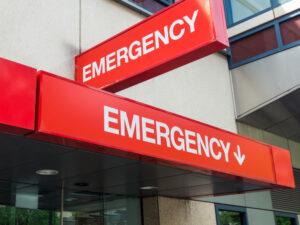
Emergency Care at Big Bend Regional Medical Center
When life takes an unexpected turn, having local access to emergency care can bring a sense of reassurance. Our Emergency Department is prepared to care for people experiencing a range of emergency conditions, offering thoughtful, skilled support to individuals and families throughout the Big Bend region during challenging moments 24/7.
Our Emergency Department is staffed by trained physicians in the evaluation and treatment of emergency conditions. Working together with our nursing staff, surgical team, and telemedicine specialists, the department focuses on offering a steady, informed, and supportive experience for patients and their loved ones throughout their visit.
As a Level IV Trauma Facility, we are equipped to provide trauma life support, patient evaluation, stabilization, diagnostic capabilities, and transfer coordination for patients requiring a higher level of care. This designation strengthens access to timely emergency services for the region and reinforces our commitment to patient safety and clinical excellence.
We are also proud to have achieved Readiness Recognition through the National Pediatric Readiness Project (NPRP). In emergency departments, research shows that high pediatric readiness — having the appropriate policies, equipment, resources, and staff competencies in place to provide effective pediatric emergency care — is associated with a four-fold lower rate of mortality in children. This recognition demonstrates our commitment to offering children in our community safe, quality emergency care when they need it most.
Together, these achievements strengthen access to timely emergency services throughout the region and reinforce our commitment to delivering care for patients of all ages.
We thank our physicians, employees, EMS partners, board members, and community supporters for their dedication in achieving these important milestones.
If you are experiencing a medical emergency, call 9-1-1.
Big Bend Regional Medical Center
2600 North Highway 118, Alpine, TX 79830
Finding Your Way to the ER
Knowing where to go during an urgent situation can bring a little clarity in a stressful moment.
If you are experiencing a medical emergency, call 911. If you need to come to the Emergency Department, our team is available 24 hours a day, seven days a week, to assess urgent medical concerns and provide support upon arrival.

30-Minute ER Pledge
In a medical emergency, every minute matters. That’s why, at Big Bend Regional Medical Center, we work diligently to have you initially seen by a medical professional within 30 minutes of your arrival in the ER. We are proud to offer comprehensive emergency services and dedicated specialists to treat a variety of conditions.

When to Go to the ER: Know the Signs
Some health concerns can be managed in a clinic or at home, but certain symptoms may signal a more serious condition that should be evaluated right away. Situations involving sudden, severe, or concerning changes—such as head injuries, high fevers, chest pain, difficulty breathing, or signs of stroke—often need prompt medical attention.

Preparing for an ER Visit
A visit to the Emergency Department can feel stressful, especially when it happens unexpectedly. Taking a moment to think about what to bring and what to expect can help the experience feel a little more manageable.

ER 30 Minute Pledge
In a medical emergency, every minute matters. That’s why, at Big Bend Regional Medical Center, we work diligently…

ER Directions
Health care starts with you. If you’re experiencing symptoms, it’s up to you to pay attention and decide how to respond…

ER Visit
A trip to the ER can often be stressful or scary- but it doesn’t have to be. A few minor preparations can help your visit go…

Heart Attack
In the movies, signs of a heart attack seem straightforward and dramatic. In real life, heart attack symptoms can happen…

Stroke
According to the National Stroke Association, a stroke is the leading cause of death in the U.S., and the leading…

When to go to the ER
Minor illnesses can often wait, but some symptoms always demand immediate medical attention. These can include…